Burst pipe, overflowing toilet, water heater on the floor or rain coming in. Tell us what happened so we can review the conditions and explain the next steps for extraction and drying.
What should I do right now?
Close the main water valve and turn off power to wet rooms only if you can do so from a dry,
safe spot. Take photos only if it is safe, then call for help. Prompt drying can limit further
damage. Mold and material-removal risks depend on moisture, contamination and conditions;
demolition is not an inevitable outcome.
Shut off the water at the main valve, or at the fixture or appliance if you know the source.
2
If water is near outlets, cords or the electrical panel, switch off power to that area from a dry spot. If you can't reach it safely, stay out and tell us when you call.
3
If the water came from a toilet, sewer line, drain or outside, do not mop, vacuum or touch it without gloves. It may contain sewage. Keep children and pets away.
4
Photograph and video the water and damaged items before you move or throw anything away.
5
Move rugs, electronics, documents and furniture off wet floors. Put foil or plastic under furniture legs that have to stay.
6
For clean water only, mop up what you can safely reach. Don't use a household vacuum on wet floors.
Signs you need emergency help, not a mop
Water is still coming in and you can't find or close the shut-off.
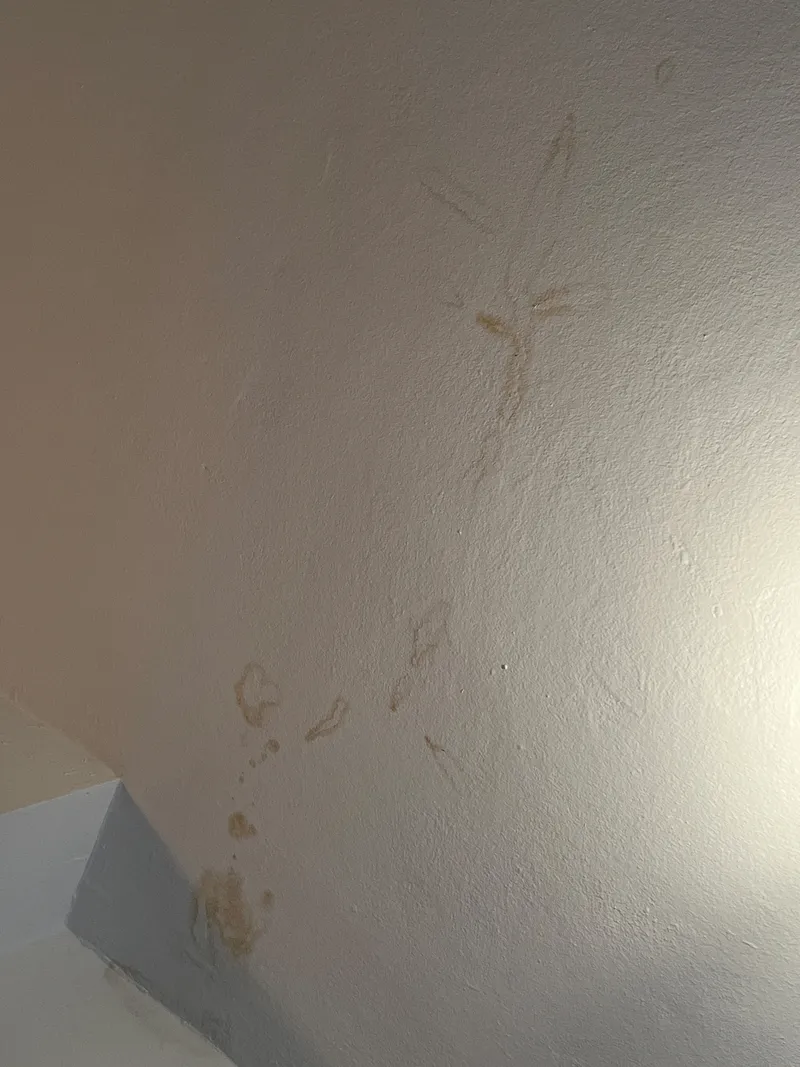
Water is coming through a ceiling, or a ceiling is sagging or bulging.
More than one room is wet, or water has reached carpet in several rooms.
The water is from a toilet, sewer line, drain or floodwater.
Water has been sitting for more than a few hours, or you smell mustiness.
You live in a condo and the water came from, or is going to, another unit.
Ceiling staining can be a sign of moisture above the surface. Illustrative photo, not a customer job. Lukas Beck · CC BY 4.0.
Resized and cropped for display.
Start with the details
Send a reviewed quote request with an optional photo. The form is not emergency dispatch. If you need to speak with someone about an active leak, the phone is available too. Stay out of unsafe areas.
Emergency water removal is the first, fastest stage of water damage restoration. The goal is
simple: get as much water out of the building as possible, as early as possible, because
extraction removes far more water than any amount of drying equipment.
Source control. We confirm the water is off and the leak is isolated. If it
needs a plumber, we say so and can recommend one.
Safety check. Wet electrical, sagging ceilings and slip hazards are dealt
with before anyone works in the space.
Extraction. Powerful extractors pull water out of carpet, pad and hard
floors. On carpet, weighted extraction tools press water out of the pad underneath.
Moisture mapping. We measure walls, floors and cabinets to find where the
water went, including the places you can't see.
Drying setup. Air movers and dehumidifiers go in the same visit, with
readings logged so we can prove progress every day.
Why the first 24 hours matter
Clean water from a supply line can often be dried in place if work starts quickly. Left for a
day or two, it soaks deeper into drywall and subfloor, picks up contaminants and is treated as
grey water. Mold can start in 24 to 48 hours in a warm house. That is the difference between
drying a room and cutting out the bottom two feet of every wall in it.
Common emergencies in Walnut Creek homes
The calls we get most are failed washing machine hoses and toilet supply lines, water heaters
that let go in garages and closets, and pipe leaks in older slab homes around Parkmead, Saranap
and the Ygnacio Valley. In Rossmoor and other condo buildings, an upstairs leak
means two units to dry and a mutual to keep informed. In winter storms, it's water coming in
under doors, through roofs and into crawl spaces when the creeks run high.
What does emergency water removal cost?
Extraction is usually priced as part of the whole drying job rather than on its own. A single
room of clean water caught the same day sits at the low end; several rooms, sewage or water that
sat for days costs more. See our water damage restoration cost table for unverified
planning estimates, not invoice-backed local data. If an after-hours fee applies, we tell you
before dispatch.
Water still coming in? Call now.
We'll talk you through shutting it off while a crew gets moving.
Quote requests are reviewed. Submitting is not a booking or emergency dispatch.
Emergency water removal FAQ
How fast can you get to my house?
It depends on the time of day and where you are, but Walnut Creek is our home base. Call and we will give you an honest arrival window on the phone before you commit to anything.
Do you charge extra for nights and weekends?
Some after-hours emergency calls carry a call-out fee. We tell you on the phone, before anyone is dispatched, so there are no surprises.
Can I just use a wet-vac and fans?
For a small spill of clean water caught immediately, often yes. Once water has soaked into carpet pad, drywall or the subfloor, fans only dry the surface. The trapped moisture is what causes mold, odor and buckled floors later.
Will insurance pay for emergency water removal?
If the cause is covered, such as a burst pipe or failed supply line, emergency extraction and drying are usually part of the claim, since your policy requires you to prevent further damage. We document everything with photos and moisture logs for your adjuster.
Who shuts off the water if I cannot find the valve?
Tell us when you call. We can usually talk you through finding the main or the street-side shut-off. In Walnut Creek, EBMUD can also shut off service at the meter in an emergency.