Compare mitigation, drying and repairs before reviewing a written restoration scope.
What is water damage restoration?
Water damage restoration is the process of removing water from a building, drying the structure
to normal moisture levels and repairing what was damaged. In Walnut Creek, most jobs take 3 to 5
days of drying. A two-room leak has an unverified planning estimate of $3,500 to $8,000 before
rebuild, not invoice-backed local data.
Choose the service and urgency, describe what got wet and optionally add a photo. A reviewed request is not an appointment or authorization to begin work.
People use "water damage restoration" for the whole job, but it really has two halves. The
first is mitigation: stop the source, get the water out and dry the building
before the damage spreads. The second is restoration: replace what had to be
removed and make the room look the way it did.
The order matters. If drywall goes back up over a wet stud, or new flooring goes down on a
damp slab, you get mold and buckling a few months later. That's why we don't start repairs
until the moisture readings say the structure is dry, and why water mitigation in Walnut
Creek is the part that can't wait.
How the restoration process works
Stop the source and make it safe. We shut off the water, check that wet
areas are safe to enter and look for electrical risks.
Inspect and map the moisture. Water travels under baseboards, through
subfloors and down inside walls. Moisture meters show us how far it went, so nothing wet
gets closed up.
Extract standing water. Extraction removes far more water than drying ever
will. Getting it out of carpet and pad in the first hours cuts days off the job.
Remove what can't be saved. Swollen particleboard, soaked insulation, carpet
pad and the bottom of saturated drywall are cut out. Anything touched by sewage is removed.
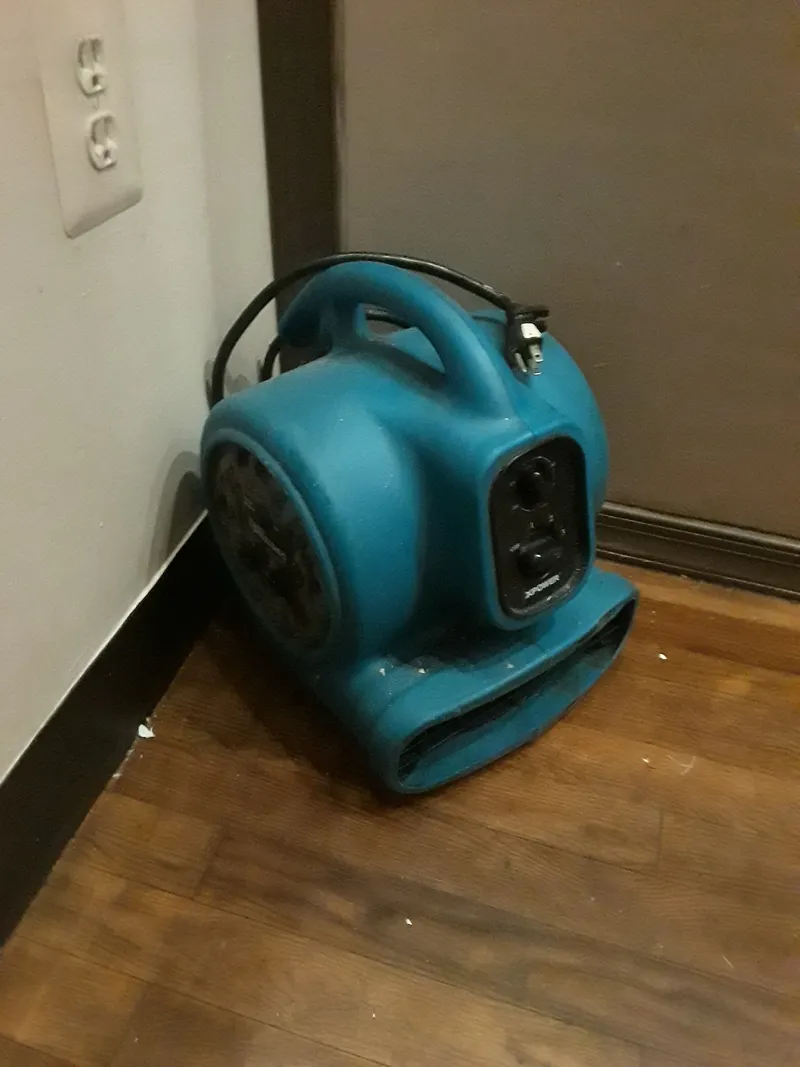
Dry the structure. Air movers push moist air off surfaces and dehumidifiers
pull it out of the room. Equipment is placed based on the readings, not a rule of thumb.
Monitor every day. We return daily to take readings and adjust the setup,
and we log every number for you and your insurer.
Repair and rebuild. Once materials test dry, drywall, texture, paint,
baseboards and flooring go back in.
An air mover directs airflow across affected materials. Illustrative equipment photo, not a customer job. Ser Amantio di Nicolao · CC0.
Resized and cropped for display.
Clean, grey or black water: why the category matters
Restoration crews classify water by how contaminated it is. The category decides what can be
dried in place, what has to be thrown out and how much protective work is needed. It's also
the single biggest driver of cost.
Water categories (IICRC S500)
Scroll sideways to see all three columns.
Category
Typical sources
What it means for your home
Category 1: clean water
Supply lines, burst pipes, faucets
Most materials can be dried in place if work starts quickly.
Category 2: grey water
Washing machines, dishwashers, toilet overflow (no waste)
Carpet pad is usually replaced; surfaces are cleaned and treated.
Category 3: black water
Sewage, floodwater, creek overflow
Porous materials that got wet are removed. Containment and protective gear.
Clean water turns into Category 2 or 3 if it sits. After 48 hours, most crews treat any leak as Category 2 or worse.
How much does water damage restoration cost in Walnut Creek?
Price follows four things: how many square feet got wet, the water category, how long it sat
before drying started and what has to be replaced.
Unverified planning estimates, Central Contra Costa (2026)
Scroll sideways to see all three columns.
Job
Unverified estimate
Drying time
One room, clean water Category 1, caught within 24 hours
$1,200–$3,500
3 days
Two to three rooms Burst pipe or supply line, Category 1–2
$3,500–$8,000
3–5 days
Condo, unit above and below Ceiling, walls and flooring in two units
$4,000–$10,000
4–5 days
Sewage or floodwater Category 3, removal of drywall and flooring
$7,000–$20,000+
5–7 days
These are planning estimates, not invoice-backed local data. They cover extraction, demolition and drying; rebuild (drywall, paint, flooring) is quoted separately. Every job is priced after an on-site moisture inspection.
The cheapest water damage is the one that gets dried on day one. A leak that sits over a weekend
can move a job from the first row of that table to the third.
How long does it take?
Hardwood, plaster and concrete slabs can extend drying because they hold water deep inside.
Repairs follow once everything tests dry: a few days for drywall and paint, one to three weeks
when flooring or cabinets are replaced. Extraction usually happens on the first visit.
If your insurer needs to approve the rebuild scope, add a few days for that.
Wet materials need prompt attention. Start with a reviewed request.
Call now and we'll tell you what to move, what to photograph and what not to touch.
Quote requests are reviewed. Submitting is not a booking or emergency dispatch.
Water damage and homeowners insurance in California
Most California homeowners policies cover water damage that is sudden and accidental:
a pipe that bursts, a supply line that splits, a water heater that fails. They usually exclude gradual leaks (a drip under the sink for months), damage from lack of maintenance,
and flooding from outside, which needs separate flood insurance through FEMA's
NFIP or a private flood policy.
To keep your claim moving:
Stop the water and take photos and video before anything is moved or removed.
Call your insurer or agent early. Policies require you to prevent further damage.
Keep damaged materials or samples until the adjuster says you can discard them.
Keep receipts for emergency work, hotel stays and anything you buy to protect the home.
Ask for the moisture logs and photos from your restoration company. They are your evidence.
You choose who works on your home, not the insurer. If you run into trouble, the California
Department of Insurance consumer hotline (800-927-4357) can help. This is general information,
not legal advice; your policy wording decides what's covered.
What we see in Walnut Creek homes
A lot of Walnut Creek water damage comes from the age of the housing. Neighborhoods like
Parkmead, Saranap and the Ygnacio Valley were largely built in the 1950s to 70s, often on
concrete slabs with copper water lines underneath. Decades in, those lines develop pinhole leaks
that show up as a warm spot on the floor, a carpet that's damp at one edge or a water bill that
jumps for no reason.
In Rossmoor, the issue is shared walls and floors. A failed toilet supply or
washing machine hose upstairs reaches the unit below fast, and both owners, the mutual and two
insurers end up involved. Clear documentation from day one avoids most of the arguments about who
pays.
And in winter, atmospheric river storms push runoff toward foundations on hillside lots and raise
Walnut Creek, Tice Creek and Grayson Creek. Garage, crawl-space and basement flooding follow, and
that water is Category 3 by default.
How to choose a water damage company
In an emergency it's tempting to call the first number you find. A few quick checks protect you
from paying twice:
Check the license. Repairs in California need a contractor licensed by the
CSLB. You can look up any license number at cslb.ca.gov in under a minute.
Ask about IICRC training. The IICRC sets the industry standards for water
damage restoration (S500) and mold remediation (S520).
Ask how they decide it's dry. The answer should involve moisture readings
logged every day, not a fixed number of days.
Look for a real local address. Many "local" listings are call centers that
sell your job to whoever is free. A company with an office nearby will still be around if
something needs fixing later.
Get the scope in writing before work starts, and ask what's mitigation and
what's rebuild.
Related services
Emergency water removal
Truck-mounted extraction day or night, then moisture mapping so nothing is left in the walls.
What is the difference between water mitigation and water damage restoration?
Mitigation is the emergency part: stopping the water, extracting it and drying the structure so the damage stops spreading. Restoration is putting the home back: new drywall, paint, baseboards and flooring. Insurers often treat them as two stages with separate estimates.
How long does water damage restoration take?
Drying usually takes 3 to 5 days. Repairs afterward depend on what had to be removed: a few days for drywall and paint, one to three weeks if flooring or cabinets are replaced, longer if materials are back-ordered.
Will my floors need to be replaced?
Not always. Carpet can often be dried in place if the water was clean and extraction happened quickly, though the pad is usually replaced. Solid hardwood can sometimes be saved with specialty drying mats. Laminate and engineered flooring that has swelled at the seams usually has to come out.
Do I need to be home while the equipment runs?
No. Air movers and dehumidifiers run around the clock. We need access once a day to take moisture readings and adjust the equipment, which takes about 20 to 30 minutes.
How do I know the walls are actually dry?
We take readings with moisture meters at marked points every day and compare them with a dry reference area in the same home. Equipment comes out only when wet materials match the dry reference. You get those readings, and so does your insurer.